Posted by: missionventureministries | July 22, 2026

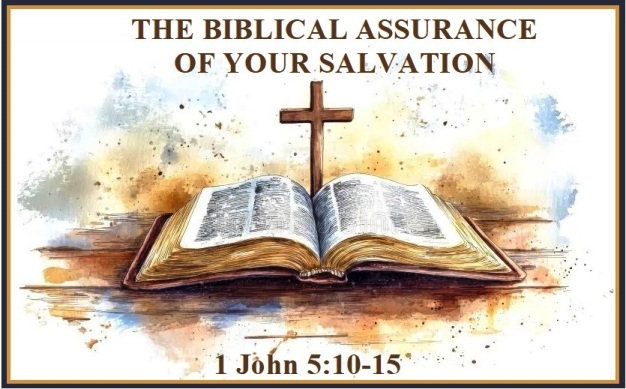
THE BIBLICAL ASSURANCE OF YOUR SALVATION – 1 John 5:10-15

Our salvation isn’t something we strive to earn. It’s a gift we are meant to receive as we see in the following verses:

Whoever believes in the Son of God accepts this testimony. Whoever does not believe God has made Him out to be a liar, because they have not believed the testimony God has given about His Son. And this is the testimony: God has given us eternal life, and this life is in His Son. Whoever has the Son has life; whoever does not have the Son of God does not have life. I write these things to you who believe in the name of the Son of God so that you may know that you have eternal life. This is the confidence we have in approaching God: that if we ask anything according to His will, He hears us. And if we know that He hears us—whatever we ask—we know that we have what we asked of Him. (1 John 5:10-15)

God gave us the Bible so we could know Him and live in ways that honor Him. He wants us to truly understand His teachings and how they apply to our life. Simply put, the Lord invites us to trust in Him with complete confidence.

Yet many of us know what it’s like to stumble into sin and immediately feel our assurance crumble. Regret and shame whisper their accusations: There’s no way I can be saved. If I were truly saved, I’d never have done such a thing. We find ourselves trapped in an exhausting cycle, questioning our salvation each time we fail rather than resting in what Christ has already accomplished.

But the Lord wants us to operate on the basis of truth, not feelings. Whenever our emotions contradict the Bible, we can trust that the Scriptures are reliable. In today’s passage, John writes with remarkable clarity, “I have written to you who believe in the name of the Son of God, so that you may know that you have eternal life” (1 John 5:13). Notice he doesn’t say “hope” or “wonder about” – he says know.

When doubts or questions arise, God answers with His promises of security. “I give them eternal life, and they shall never perish; no one will snatch them out of my hand. My Father, who has given them to me, is greater than all; no one can snatch them out of My Father’s hand” (John 10:28-29).

Many of us struggle with lingering doubts about our salvation. To settle this question, let’s look at three truths the Lord wants believers to understand: 

  1. God wants everyone to be saved. He calls all men and women to Himself, but there must be a response to His invitation. When we answer His call, the Father makes us part of His everlasting family (Romans 10:9-13).
  1. God wants everyone to be saved by grace through faith. Ephesians 2:8-9 declares that our salvation is entirely the work of the Lord – His plan, His work, His gift. Our only part is faithfully receiving what He freely offers.
  1. God wants everyone to be sure of their salvation. If doubt creeps in when you stumble, recognize that God isn’t the one planting those seeds of insecurity. He has already established the plan by which we can be saved, and He invites us to rest confidently in that finished work.

Salvation isn’t something we must re-earn with each fresh start. Rather, it’s a settled reality we can embrace confidently because: “All those the Father gives Me will come to Me, and whoever comes to Me I will never drive away. For I have come down from heaven not to do My will but to do the will of Him who sent Me. And this is the will of Him who sent Me, that I shall lose none of all those He has given Me, but raise them up at the last day. For my Father’s will is that everyone who looks to the Son and believes in Him shall have eternal life, and I will raise them up at the last day” (John 6:37-40). So lay your feelings of regret and shame before the Lord, and rest in the certainty that comes only with His truth.

Passages like John 3:16, 1 John 5:13, and Ephesians 1:13-14 all point to the complete certainty we can embrace. The next time you feel unsure, read these passages and ask the Spirit to anchor your faith in what the Lord has already accomplished. Amen!

*******

Source: In Touch Ministries – Dr. Charles Stanley

Posted by: missionventureministries | July 15, 2026

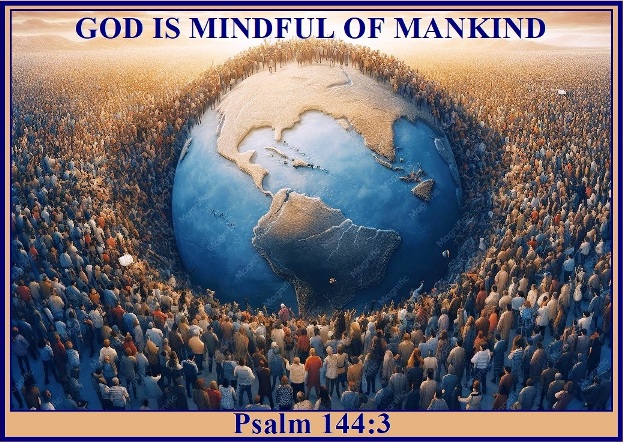
GOD IS MINDFUL OF MANKIND – Psalm 144:3

“Lord, what is man, that You look after him? Or a son of man, that You think of him?” (Psalm 144:3)

In the previous verses David exalted God’s great strength and victory. In light of that, it amazed David that God would have an interest in him or in humanity in general. This verse is a humble, wonder-filled question: despite how small and temporary people are, God still notices them.

David moves from praise for God’s power to wonder at God’s attention to frail human beings. The rhetorical question echoes the biblical theme that humans are small and transient, yet still remembered by God. In context, the question is almost startling because it comes from a warrior-king who has just been describing divine military support.

The population of the world is quickly approaching more than 8.2 billion people in July of 2026, of which you are one individual. If that isn’t humbling enough, consider this: Recent estimates show that approximately 117 billion humans have been born since the dawn of humanity, according to recent estimates from the Population Reference Bureau. And again, each one of just is a single individual in that vast number. Numbers that large make us think of sand of the seashore or stars I the heavens. “Therefore from one man (Abraham), and him as good as dead, were born as many as the stars of the sky in multitude—innumerable as the sand which is by the seashore” (Hebrews 11:12).

Yet, in spite of the seeming insignificant of a single human life, Jesus taught that God sees every sparrow that falls and know the number of hairs on your head (Luke 12:6-7).

Such truths made the psalmist, David, look into the heavens and wonder how it could be possible for the mighty God who created the world and everything in it to know and care for him (Psalm 8:3-4). David also wrote that God knows us because He fashioned us, individually, in our mother’s womb (Psalm 139:13-14).

You may be only one, but you are unique and precious to God because, He created you for Himself.

The Bible uses human smallness to cultivate humility, not hopelessness. Texts like Job 25:4-6, Ecclesiastes 1:2-4, and James 4:14 stress human frailty, brevity, and limited understanding. At the same time, the Bible presents God as mindful, compassionate, and purposeful toward people who seem tiny in comparison with creation. Psalm 8:4 explicitly asks why God is “mindful” of humans, and the topical summaries note that this is meant to show both God’s greatness and the value he gives to humanity.

Humans are created in the image of God, so their smallness in the cosmos coexists with real dignity and worth before their Creator; and deepen our amazement that the Lord still cares for ordinary mortals.

So let us remember that: “The faithful love of the Lord never ends! His mercies never cease. Great is His faithfulness; His mercies begin afresh each morning” (Lamentations 3:22-23).

*******

Posted by: missionventureministries | July 8, 2026

WHY DO WE THINK THAT AT TIMES OUR NEEDS GO UNMET? – Philippians 4:19-20

When the Bible specifically says that, my God will meet all your needs according to the riches of His glory in Christ Jesus. (Philippians 4:19)

Philippians 4:19, is a promise that God will supply the believer’s needs, not every desire, and that He does so from the limitless resources of His glory in Christ Jesus. In context, Paul says this while thanking the Philippians for their generous support, so the verse is closely tied to God’s care for faithful believers and the sufficiency of Christ.

  • My God highlights Paul’s personal confidence in God’s care.
  • Will meet all your needs” means God provides what is truly necessary, which is not always the same as what we want.
  • According to the riches of His glory” means the measure of God’s provision is His own abundant and inexhaustible wealth, not human limitation.
  • In Christ Jesus” shows that all of God’s provision comes through union with Christ.

As we see from this verse, God is faithful in keeping His promises and faithful even when we’re awaiting their fulfillment. God has made many promises throughout Scripture, yet sometimes their fulfillment seems delayed. So we pray, wait, and question.

When our Father doesn’t meet our expectations, we often look outside ourselves for the reason. But it’s important to understand that while God’s love is unconditional, many of His promises have conditions attached. Philippians 4:19, for example, is a promise that the Lord will supply all of a believer’s needs. Scripture shows that obedience plays a role in how we experience God’s provision (Psalm 81:10-12). Persistent disobedience can create barriers in our relationship with Him; therefore, restoring that connection begins with repentance.

Taking a promise out of its biblical context can lead to misunderstanding what God has actually said. Expecting Him to fulfill a conditional promise when we’re not meeting its requirements sets us up for disappointment.

This verse is best read as a call to trust God’s wisdom, not as a blank check for material prosperity. It reassures believers that God is able to supply what they need for obedience, endurance, and faithful living.

Please understand that God does not promise to fund every wish, but He does promise never to be insufficient for every real need, meaning that a need is what is necessary for faithful life, obedience, and God’s purposes, while wants are desires that may be good, but are not essential and must be submitted to God’s will. In Scripture, God clearly promises to provide needs, and He sometimes grants desires too, but only in ways that fit His wisdom and purpose of us.

A need is something essential to carry out God’s calling or sustain life in a God-honoring way. A want is something desired for comfort, pleasure, preference, or ambition, and may or may not be granted. The key theological point is not that wants are bad, but that they are secondary to God’s will and can become distorted if they are treated as ultimate.

God supplies what believers truly need from His riches in Christ. At the same time, passages like Psalm 37:4 are often understood to mean that when delight is in the Lord, desires themselves are shaped by Him.

In summary, the good news is that God’s expectations aren’t burdensome (1 John 5:3). What He asks is that we love, honor, and obey Him, not to earn His favor, but because relationship requires participation. As we walk faithfully with Him, we discover He is faithful to meet our needs. God promises to provide what is necessary for His purposes and our obedience and He may also grant desires when they are aligned with His will.

*******

Posted by: missionventureministries | July 1, 2026

GOD WANTS A RELATIONSHIP WITH US – Romans 1:19-20

They know the truth about God because He has made it obvious to them. For ever since the world was created, people have seen the earth and sky. Through everything God made, they can clearly see His invisible qualities, His eternal power and divine nature. So they have no excuse for not knowing God. (Romans 1:19-20)

The Bible tells us that God reveals Himself to humans in four primary ways. All that God has created in nature discloses who He is. Our consciences, the human mind and heart, bear witness to the existence of God. He reveals Himself to us through His Word and the person of Jesus Christ. The first two ways that God reveals Himself to us are general and limited. But the second two avenues of revelation are personal, full, and complete.

Paul said in Romans 1:19–20 that, ever since the creation of the world, God has made the knowledge of Himself evident to all people. According to Paul, God has provided sufficient insight into His eternal power and divine attributes through creation so that no one can be excused for missing His existence.

Scripture says that God has revealed His existence to humans in their consciences by impressing His law on their hearts even before they hear the gospel message: “Even Gentiles, who do not have God’s written law, show that they know his law when they instinctively obey it, even without having heard it. They demonstrate that God’s law is written in their hearts, for their own conscience and thoughts either accuse them or tell them they are doing right” (Romans 2:14–15).

God’s purpose for placing this yearning in the human heart is so that we might have a living, personal relationship with Him. The apostle Paul spoke of this internal revelation to the pagan crowds of people in Athens: “His purpose was for the nations to seek after God and perhaps feel their way toward Him and find Him, though He is not far from any one of us” (Acts 17:27).

God has revealed Himself to us with the most clarity and detail in the person of Jesus Christ. He is the living, breathing, flesh-and-blood, human presentation of God: “The Word became flesh and made his dwelling among us. We have seen his glory, the glory of the one and only Son, who came from the Father, full of grace and truth” (John 1:14).

Paul told the Colossians, “Christ is the visible image of the invisible God. He existed before anything was created and is supreme over all creation” (Colossians 1:15). And Jesus said to Philip, “Have I been with you all this time, Philip, and yet you still don’t know who I am? Anyone who has seen me has seen the Father!” (John 14:9).

One of the greatest ways we get to know the person of Jesus is through the Word of God. The Bible is God’s revelation of Himself and His purposes throughout history. Jesus Himself taught that the Scriptures reveal who He is (Luke 24:27, 44–45; John 5:39).

The Bible presents us with eyewitness testimony of the revelation of God in Jesus Christ (2 Peter 1:16–19). From Genesis to Revelation, Scripture is God’s revelation of Himself for all to read and understand.

Many people can acknowledge the fact that there is a God. But God wants us to know Him intimately, to spend all eternity in close fellowship with Him.

God has revealed Himself to mankind and wants us to have a relationship with Him. Yet not everyone accepts His invitation.

Without God at the center of our life, we can find ourselves drifting. We hunger for something to fill the emptiness inside but may not recognize that only the Lord can truly satisfy that longing. In our search for meaning, we often turn to other things like money, success, relationships, achievements, hoping they’ll provide the fulfillment we seek. We pour our passion, time, and energy into these pursuits. Yet nothing this world offers can fully satisfy our soul.

The beautiful truth is that our heavenly Father desires a relationship with us. He loved us so much that He gave His own Son to make this possible (John 3:16). The door stands open.

Look around at the evidence of God’s presence, in creation’s beauty, in moments of unexpected kindness, in the persistent sense that there’s something more. He’s inviting you into intimate friendship with Him.

If you’ve put off responding to His invitation, consider what you might be missing. A relationship with God offers peace, purpose, and joy beyond anything we can imagine (Ephesians 3:20). And better still, He’s waiting with open arms.

Remember, you were made for God, and nothing else will ever truly satisfy.

*******

Posted by: missionventureministries | June 24, 2026

WHAT DO YOU DO WHEN YOU COME TO AN IMPASSE IN YOUR LIFE? – Proverbs 3:5-6  

“Trust in the Lord with all your heart and do not lean on your own understanding. In all your ways acknowledge Him, and He will make your paths straight.” (Proverbs 3:5-6)

Many times Christians pray and read the Scriptures; they know what God is telling them to do, but sometimes they hesitate. His will for our life often looks like that long, steep hill, and the thought of climbing it is worrisome because we don’t have the assurance of how to manage it. But halfhearted trust always gets us into trouble.

Nevertheless, think what we will miss if we choose our own way instead of walking with the Lord. All the wonderful things He’s planned for our lives will be forfeited. Though the ride may get a little rough at times, we should remember that we don’t know how it’s all going to work out but our heavenly Father does. So who will we trust, Him or us?

We know what God is telling us to do, but sometimes we hesitate. That’s why we need a verse to anchor us when we’re tempted to distrust the Lord and go about doing it in our own way. Proverbs 3:5-6 has been my anchor verse for many years: “Trust in the Lord with all your heart and do not lean on your own understanding. In all your ways acknowledge Him, and He will make your paths straight.”

Whenever we have an important decision to make, we need to remember and come back to this passage. It helps us remember what’s required of a disciple of Christ. A disciple is a pupil who follows his teacher’s instruction. But the goal isn’t simply to fill our minds with information; it’s to become more like our Teacher.

For the Christian, discipleship is a lifelong process of being transformed into the image of Christ and walking in obedience. He gradually teaches us and leads us in the direction He wants us to go. That’s why Proverbs 3:5-6 is such a trustworthy guide. It contains foundational principles that tell us exactly how to stay on track.

A disciple trusts the Lord. Just consider this: Who has more knowledge, you or the omniscient Lord? Who knows the past, present, and future? Why in the world would we rely on our own limited comprehension when God understands everything about us and knows what’s waiting around the corner? He sees every segment of our lives and will faithfully guide us along the best path if we’ll just trust and follow Him with all our heart.

Trust in God leads to submission, because we recognize that He has the right to direct every step we take. That’s why Proverbs 3:6 tells us to acknowledge the Lord in all our ways. We can’t pick and choose the times we’ll submit to His authority and expect to stay on a right path. When we’re not in the center of His will, we stumble around and encounter obstacles. Not only do we end up wasting time and energy, but the journey is also more difficult.

God’s path isn’t necessarily easy, but it’s always the best. Even the difficulties we encounter fit into His plan because they teach us to trust Him.

The Lord wants us to realize that He is the supreme, omnipotent Ruler of the universe, who is capable, ready, and willing to deal with every situation. Another verse that has repeatedly reassured the born again believer of His watchful care is Psalm 138:8: “The Lord will accomplish what concerns me.” The only way to have peace in any situation is to trust the Lord and let Him lead, knowing that He’s always working for our best interests.

Trust in God leads to submission, because we recognize that He has the right to direct every step we take.

A disciple accepts the Lord’s discipline. If we’re going to let God direct our path, we’ll also experience His loving discipline. Think of it not as punishment but rather as correction. He sees when we’ve gone astray and loves us too much to let us continue down that path. Discipline is necessary because without an incentive to change course, we’ll miss the blessings that result from following Him.

When discipline comes, we generally respond in one of two ways, we either rebel against it or embrace it. Proverbs 3:11-12 says, “My son, do not reject the discipline of the Lord or loathe His reproof, for whom the Lord loves He reproves, even as a father corrects the son in whom he delights.” If we choose to see our troubles from this perspective, our moaning and complaining will become praise and gratitude to God.

As Christians we might say, “Lord, I don’t understand why this is happening. It’s painful, and I don’t like it. But I know that You are wiser than I am, so I’m going to thank You for loving me enough to correct me.” The most important thing is that when we do this, we end up in the center of God’s will and can accomplish what He wants us to do, according to His timetable.

Therefore, let Proverbs 3:5-6 become an anchor verse in your life. It will encourage you to let God lead you according to His perfect will. Thus, when He asks you to do something that seems beyond your abilities, decide to trust Him, and say, “Okay, Lord, I am trusting in You!”

Always remember that the moments we trust God are going to be the most exciting of our life because we know that He has be best for us.

*******

Posted by: missionventureministries | June 17, 2026

UNDERSTANDING GOD’S LOVE – John 3:16

“For God so loved the world that He gave His only begotten Son, that whoever believes in Him shall not perish, but have eternal life.”  (John 3:16)

To fully appreciate the depth and significance of John 3:16, it is essential to understand its context within the Bible. This verse is part of a conversation between Jesus and Nicodemus, a Pharisee and member of the Jewish ruling council. Nicodemus approaches Jesus at night, seeking to understand His teachings and the miracles He performs. In this dialogue, Jesus explains the necessity of being “born again” to see the kingdom of God, leading to the profound declaration found in this verse.

The themes of love, sacrifice, and eternal life are intricately woven throughout this verse. God’s love is portrayed as unconditional and all-encompassing, extending to the entire world. The sacrificial nature of this love is evident in the giving of His “one and only Son,” a reference to Jesus Christ’s impending crucifixion. This ultimate act of sacrifice underscores the gravity of God’s love and the lengths to which He is willing to go to redeem humanity.

Moreover, the promise of eternal life is a central part of the Christian faith. This verse assures believers that faith in Jesus Christ leads to everlasting life providing comfort, hope, and a sense of purpose to Christians, reinforcing the transformative power of God’s love.

John 3:16 provides a profound insight into the nature of God’s love, presenting it as both unconditional and sacrificial. Unlike human love, which often comes with conditions and limitations, God’s love is boundless and available to everyone. This divine love surpasses all forms of human affection, reaching out to individuals regardless of their background, beliefs, or past actions.

The phrase “for God so loved the world” emphasizes the universal scope of God’s love. It is not restricted by geographical boundaries, social status, or moral failures. Instead, it embraces all of humanity, offering a love that is both inclusive and transformative. This aspect of God’s love challenges our understanding and calls us to broaden our perspectives on acceptance and compassion.

The sacrificial nature of God’s love is epitomized in the gift of His ‘one and only Son.’ The willingness to sacrifice Jesus Christ for the salvation of humanity highlights the depth and value of this love. It is a love that goes beyond mere words and is demonstrated through profound action. The crucifixion of Jesus is the ultimate testament to the lengths to which God will go to express His love for us.

This act of sacrifice underscores the immense worth that God places on each individual. It is a love that sees beyond our flaws and failures, recognizing our inherent value and potential. The sacrifice of Jesus serves as a powerful reminder of the lengths to which God will go to offer redemption and eternal life to all who believe.

In essence, the love described in John 3:16 are a challenge and an invitation. It compels us to re-evaluate our own understanding of love and to strive for a higher standard of selflessness. At the same time, it invites us to embrace the transformative power of God’s love, allowing it to shape our lives and guide our actions.

It signifies a quality of life that begins in the present and extends into eternity, characterized by an intimate relationship with God, filled with peace, joy, and fulfillment.

From a Christian perspective, eternal life is not just about living forever; it is about living in the presence of God. This divine presence transforms our existence, infusing it with purpose and meaning. Believers experience a foretaste of this eternal life through their faith in Jesus Christ, the pathway to this ultimate promise. The belief in Jesus as the Son of God and the Savior is central to accessing eternal life. It is through His sacrificial love and resurrection that humanity is offered redemption and the hope of eternal communion with God.

However, there are common misconceptions about eternal life that need to be addressed. Some may envision it as a distant, future reality, detached from the present life. This view overlooks the transformative aspect of eternal life that begins here and now, influencing how believers live daily. Another misconception is that eternal life is solely about escaping suffering or achieving personal desires. In truth, it is about the fulfillment found in a relationship with God, which surpasses all earthly pleasures and challenges.

Believers are called to live with the assurance and hope that the promise of eternal life brings. This assurance is rooted in God’s unwavering love and faithfulness, as demonstrated in what Jesus tells Nicodemus. By embracing this promise, Christians are encouraged to lead lives that reflect their faith, embodying the peace, joy, and fulfillment that come from knowing God. This eternal perspective provides strength and comfort, guiding believers through life’s trials and inspiring them to share this profound love with others.

To truly live out the teachings of John 3:16, believers must embody God’s love in their everyday interactions. One of the most profound ways to do this is through acts of kindness. Simple gestures such as helping a neighbor, volunteering at a local charity, or even offering a listening ear to someone in need can demonstrate the love and compassion. These acts may seem small, but they can have a significant impact on those who receive them, creating ripples of kindness that extend far beyond the initial act.

Forgiveness is another crucial aspect of living out John 3:16. Just as God forgives us, we are called to forgive others. Holding onto grudges and harboring resentment can hinder our spiritual growth and damage our relationships. By practicing forgiveness, we not only free ourselves from the burden of anger but also open the door to reconciliation and healing. This reflects the immense love and grace that God has shown us through Jesus Christ.

Compassion is also essential in embodying the love of Christ. Being empathetic and understanding towards others’ struggles can foster a supportive and loving community. Whether it is providing comfort to a grieving friend or offering support to someone facing a difficult situation, compassion allows us to connect with others on a deeper level, mirroring the unconditional love that God has for all of us.

Believers are also encouraged to share the message of John 3:16 with those who may not yet know about God’s love and the promise of eternal life. This can be done through personal testimonies, inviting friends to church, or simply having open and honest conversations about faith and salvation that Christ brings. Sharing this message can plant seeds of faith in others, allowing them to experience God’s love for themselves.

Finally, personal faith and trust in Jesus are paramount. Deepening one’s relationship with Him through prayer, Bible study, and community involvement is vital. Prayer allows for intimate communication with God, while Bible study provides a deeper understanding of His word. Being involved in a faith community offers support, encouragement, and accountability, helping believers grow in their spiritual journey. By integrating these practices into daily life, believers can continually renew their faith and live out the profound love described in John 3:16.

No other verse in the Bible so concisely summarizes God’s relationship with humanity and the way of love and salvation as John 3:16 does.

*******

SOURCE: Sections taken from Pastor Aaron Joseph Hall

Posted by: missionventureministries | June 10, 2026

WHAT THE TABERNACLE REVEALS ABOUT JESUS AND THE PLAN OF GOD – John 1:14

First and foremost the tabernacle is a picture and type of that which takes the place of pre-eminence in the Bible, and that is the person of Jesus Christ, the Son of God. He is the true fulfillment of this structure. As the Bible brings out;  “And the Word (Christ) became flesh (human, incarnate) and dwelt (tabernacled) among us. We have seen His glory (His honor, His majesty), the glory of the one and only Son, who came from the Father, full of grace (favor, loving-kindness) and truth” (John 1:14).

The earthly tabernacle pictures salvation. This is true of what it cost Jesus to provide the means of salvation and also of the steps necessary for those who want to be saved. Concerning the former, Jesus had to fulfill His role as the High Priest of the New Covenant, entering into the Heavenly tabernacle as the book of Hebrews teaches:  Hebrews 9:11-12, 24: “When Christ came as high priest of the good things that are already here, he went through the greater and more perfect tabernacle that is not man-made, that is to say, not a part of this creation. He did not enter by means of the blood of goats and calves; but he entered the Most Holy Place once for all by his own blood, having obtained eternal redemption… For Christ did not enter a man-made sanctuary that was only a copy of the true one; he entered heaven itself, now to appear for us in God’s presence.”

The Temple in Jerusalem, as described in the Bible, serves as a profound symbol of God’s presence among His people and His covenant relationship with Israel. Each element within the Temple holds significant symbolic meaning, reflecting various aspects of divine truth and spiritual reality.

The Tabernacle shows God’s presence with His people, God wanted to dwell with His people as He does now and wants to have a relationship with His children. God is not distant nor is He unapproachable; He wants to be with us.

Just as the tabernacle was at the center of the camp during Moses’ time, He wants to be the center of lives today. Therefore, our lives should be spent living in His presence everyday, which is the place He deserves.

The Tabernacle Shows God’s Justice and Mercy, it reminds us that sin must be punished. God is a holy God. At the same time, He makes a way to Him. The Ark of the Covenant itself had a mercy seat on it. In God’s holiness, He did not reject people; rather He shows us the way back to Him.

As we study the tabernacle, it is amazing to see that God designed it so that every single thing points to Jesus as He fulfills all of the roles of the things in the tabernacle and more. Everything is focused on Him.

Jesus is the Gate. “I am the gate; whoever enters through me will be saved. They will come in and go out, and find pasture” (John 10:9). He is the only way to salvation. “I am the way, and the truth, and the life; no one comes to the Father except through Me” (John 14:6).

The Altar of Burnt Offering. Located in the Temple courtyard, the altar of burnt offering is where sacrifices were made to atone for sin. It symbolizes the necessity of atonement and the seriousness of sin. The sacrifices point forward to the ultimate sacrifice of Jesus Christ, “the Lamb of God, who takes away the sin of the world” (John 1:29).

The Bronze Basin, or laver, used by the priests for ceremonial washing, symbolizes purification and the need for holiness. It reflects the cleansing necessary to approach God, as emphasized in Psalm 24:3-4: “Who may ascend the hill of the LORD? Who may stand in His holy place? He who has clean hands and a pure heart.” Only through Him can we be cleansed of our sins and receive forgiveness.

Jesus is the Lampstand. He is the light of the world and He lights the way to God. The Menorah represents the illumination of the Holy Spirit and the truth of God’s Word, as seen in Psalm 119:105: “Your word is a lamp to my feet and a light to my path.”

The Bible is from beginning to end a testimony about Christ and God’s merciful plan of redemption. “I am the Light of the world; the one who follows Me will not walk in the darkness, but will have the Light of life” (John 8:12). Praise the Lord; He has taken His children out of the darkness and into His marvelous light (1 Peter 2:9).

Jesus is the Table of Showbread: It held twelve loaves representing the twelve tribes of Israel, symbolizing God’s provision and fellowship with His people. It points to Jesus as the “bread of life” (John 6:35), who sustains and nourishes spiritually. We should come to Him to be filled and not to the world.

The Altar of Incense: Placed before the veil, symbolizes the prayers of the saints rising to God. The sweet-smelling incense represents the intercession of Christ and the prayers of believers, as depicted in Revelation 8:3-4: “And the smoke of the incense, together with the prayers of the saints, rose up before God from the hand of the angel.”

The Veil: Separating the Holy Place from the Most Holy Place signifies the barrier between a holy God and sinful humanity. Its tearing at the moment of Christ’s death (Matthew 27:51) symbolizes the new access to God made possible through Jesus’ sacrifice, as described in Hebrews 10:19-20: “Therefore, brothers, since we have confidence to enter the Most Holy Place by the blood of Jesus, by the new and living way opened for us through the curtain of His body.”

The Ark of the Covenant: Housed in the Most Holy Place, is the central symbol of God’s presence and His covenant with Israel. It contained the stone tablets of the Law, Aaron’s rod that budded, and a jar of manna (Hebrews 9:4). The Ark represents God’s throne on earth, His law, and His provision. The mercy seat atop the Ark, where the high priest would sprinkle blood on the Day of Atonement, symbolizes God’s mercy and the atonement for sin (Leviticus 16:14-15).

The Cherubim: Depicted on the Ark’s mercy seat and woven into the veil, symbolize the holiness and majesty of God. They serve as guardians of His presence, reflecting the reverence and awe due to Him.

Each element of the Temple not only served a practical purpose in the worship of ancient Israel but also pointed to deeper spiritual truths fulfilled in Jesus Christ. Through these symbols, believers gain insight into the nature of God, the seriousness of sin, and the means of redemption.

In conclusion: It is awesome to see how the Old Testament tabernacle points to Jesus. But where is the tabernacle today? The believers are the temple of God: “Do you not know that you yourselves are God’s temple, and that God’s Spirit dwells in you?” (1 Corinthians 3:16). Therefore, we are to be a holy place for Him to dwell in and in turn lead others to Him.

*******

Posted by: missionventureministries | June 3, 2026

GOD’S PLANS ARE BETTER THAN OURS – Isaiah 55:8-9

“For My thoughts are not your thoughts, neither are your ways My ways,” declares the Lord. “As the heavens are higher than the earth, so are My ways higher than your ways and My thoughts than your thoughts. (Isaiah 55:8-9)

God’s ways are higher than our ways because His ways are always part of a bigger plan. We see only a small piece of the puzzle; God sees the finished work. We see a portion of the tapestry; while God is the Weaver at the loom.

When our desire is to live in step with His plan, we can have confidence that, even when bad things happen, God is still in control. He often takes what Satan meant for evil and turns it into good for the salvation of many (Genesis 50:20). God’s priorities are the magnification of His glory and the expansion of His kingdom (Psalm 97:6). When God’s glory and God’s kingdom are our priorities, too, we learn to rejoice that His ways are higher than our ways.

Ephesians 1:11 reminds us that God’s plan has a greater purpose than what we see. “In Him also we have obtained an inheritance, being predestined according to the purpose of Him who works all things according to the counsel of His will.” When we show God our willingness to trust Him in every situation, we become a part of that greater purpose. And the familiar words in Jeremiah 29:11 bring us a sense of anticipation, when we hear that phrase, “For I know the plans I have for you,” declares the Lord, “plans to prosper you and not to harm you, plans to give you hope and a future.”

Let us take a look at some examples why God closes doors to advance His cause:

  • He closed young Sarah’s womb so He could display His power to the elderly one.
  • He shut the palace door on Moses the prince so He could use him to liberate His people.
  • He marched Daniel out of Jerusalem so He could use Daniel in Babylon.
  • He kept Paul out of Asia so he could speak to Lydia (Acts 16:12-15).
  • He placed Paul in prison so that he could talk to the jailer (Acts 16:25-34).
  • He’ll stir up a storm to display His power (Luke 8:22–25; Matthew 8:23–27; Mark 4:36–41; John 6:16–21).

Even Jesus knew the challenge when He requested “My Father, if it be possible, let this cup pass from me; nevertheless, not as I will, but as you will” (Matthew 26:39). He knew God’s will was for Him to go to the cross so that He cold say yes to us at the gates of heaven.

Yes—when people say “God’s plans are better,” they usually mean His wisdom, timing, and purposes are higher than ours, so what He does is ultimately wiser and better than what we would imagine or choose on our own. God’s thoughts and ways are above human understanding. Isaiah 55:8-9, invites us to trust Him, seek Him, and receive His mercy rather than leaning on our own limited perspective.

A simple way to say it is: God sees the whole story; we only see the moment. It is not that our plans are bad but that God’s plans are superior.

Please never forger that God will keep in perfect peace all who trust in Him, all whose thoughts are fixed on Him! (Isaiah 26:3). So remember that your blocked door doesn’t mean God doesn’t love you. Quite the opposite, it is proof that He does. So wait and trust Him and you will be blessed according to His will for you.

*******

Posted by: missionventureministries | May 27, 2026

THE CROSS, OUR BRIDGE TO GOD – John 14:6

“I am the way, and the truth, and the life; no one comes to the Father but through Me.” (John 14:6)

What a powerful and awe-inspiring statement!

When Jesus calls Himself “the way,” He is saying the He, and He alone is the way, the road, or path to the Father. In John 14:6, Jesus emphatically used the pronoun “I” meaning, “I, and none besides Me.”

Jesus is the only way that we can approach the Father. Recall that in Isaiah 43:11 God said: I, even I, am the Lord, and apart from Me there is no savior.

We need to think of Jesus not only as a way but as a bridge. The apostle Paul tells us in Romans 3:23 that “all have sinned and fall short of the glory of God.” Between us and God lies a great chasm we cannot cross on our own. No matter how hard we try in our own strength, we cannot close the distance.

There’s only one way to cross this wide chasm – the cross in form of a bridge. That’s what Jesus is for us. He stands in the gap, providing safe passage across the void and into the arms of our heavenly Father. The Father bridged the gap through the atoning death of His only Son, Jesus Christ.

Sin is serious, and its power to separate us from God is real. But there is hope in Jesus, the One who overcame sin on the cross. Jesus is the bridge spanning a chasm between us and God that we could never cross on our own since the Lord Jesus is the only way to everlasting life. All who believe in Him have that life and will never perish.

Few verses are cited as often as this Scripture. Jesus is preparing His disciples with reassurance, in advance of His arrest and death (John 14:1–4). These words also broadly encourage believers to maintain faith in the face of hardship. Confidence comes to Christians, in part, from knowledge that Jesus is preparing to take us to be with Him.

There is no possibility of translating this comment as Jesus being “one way,” or “a truth,” or just “life;” since both Greek and English refer to “the” way, “the” truth, and “the” life. John doubles down on the idea, in fact, by emphasizing that nobody comes to God “except through [Christ].” Rarely does anyone object to the idea that those who believe in Christ will be saved. What offends many is the suggestion that only those who believe in Christ find salvation. Yet that is the clear teaching of Scripture (Acts 4:12; 1 Timothy 2:5–6).

This is the sixth of seven moments in John’s gospel where Jesus invokes the “I Am” terminology. This echoes God’s self-identification to Moses (Exodus 3:14). The seventh, and last, “I Am” statement will come later in this same discourse (John 15:1).

In conclusion, please spend some time meditating on Jesus, since He is the only “way” to heaven. Without God’s help, we are powerless to bridge the gap ourselves. Heaven would forever remain out of reach, beyond a great divide. When we understand this truth, we begin to appreciate the true power of the cross. This knowledge comes through a single, exclusive means: belief in Jesus Christ (John 14:6).

*******

Posted by: missionventureministries | May 20, 2026

PRAY AND ASK GOD ABOUT EVERYTHING YOU DO – Philippians 4:6

“Do not be anxious about anything, but in every situation, by prayer and petition, with thanksgiving, present your requests to God.” (Philippians 4:6)

Paul is not giving a random self-help tip; he is addressing believers who were facing anxiety, conflict, and uncertainty while he himself was imprisoned. The verse fits his larger message: bring every concern to God, trust Christ, and let prayer replace fear.

Consult God in everything. Always and immediately; quickly, live with one ear toward heaven keeping the line open to God.

In everything you do you should be asking:

  • “Is this opportunity from God?”
  • “Are you in this venture God?”
  • “Should I take this road, God?”

At every decision and each crossroads, acknowledge Him, heed Him and ask him: “Do I turn right or left?” (Isaiah 30:21) – “This is the way; walk in it.”

“Trust in the Lord with all your heart, and do not trust in your own understanding. Agree with Him in all your ways, and He will make your paths straight” (Proverbs 3:5-6)

Our relationship with God is exactly, that a relationship. His invitation is clear and simple: “Come and talk with me, O my people. And our hearts responds should be, “Lord, I am coming” (Psalm 27:8).

We abide with Him and He abides in us. He grants us wisdom as we need it, as we trust and obey His advice thru the Holy Spirit who abides in us.

So let us always ask: “God what do you think?” “What is it that You want me to do? Then wait patiently for His wise and loving answer and follow His lead.

*******

Older Posts »

Categories